
How to Train Like La Albirroja: Paraguay's Resilience Culture, Chaco Endurance and the Science of Defensive Discipline
Paraguay's return to the World Cup stage in 2026 is a story two decades in the making, a landlocked South American nation finishing sixth in a brutally competitive CONMEBOL qualifying table to book its place at the tournament for the first time since 2010. La Albirroja carry with them a fitness culture shaped by the punishing heat of the Gran Chaco, a defensive footballing identity built on collective discipline and a national sporting tradition that has consistently produced players of extraordinary physical durability relative to the country's modest population of seven million. The science behind Paraguayan athletic resilience offers lessons in heat tolerance, defensive conditioning and the kind of unglamorous, relentless work ethic that rarely makes headlines but consistently delivers results.

The Gran Chaco: One of South America's Harshest Training Environments
Much of Paraguay's territory lies within the Gran Chaco, a vast lowland region of dense scrubland and extreme seasonal heat that ranks among the most thermally demanding inhabited environments in South America. Summer temperatures in the Chaco regularly exceed 40 degrees Celsius and the region's combination of intense heat with relatively high humidity during the wet season creates conditions that challenge thermoregulation severely.
Populations who train and work consistently in Chaco-type conditions develop the heat acclimatisation adaptations explored throughout this series: expanded plasma volume, improved sweat efficiency and a thermoregulatory system that performs more effectively across a wider range of competition temperatures. Research on heat-adapted endurance athletes confirms that two weeks of consistent training in conditions above 30 degrees Celsius produces measurable improvements in cardiovascular efficiency that persist even when athletes subsequently compete in cooler climates. Paraguay's interior population develops this heat resilience as an unavoidable consequence of geography.

Paraguayan Football: The Defensive Discipline Tradition
Paraguay's footballing identity has historically been built on defensive solidity, physical organisation and the collective work rate to frustrate technically superior opponents. This style places specific and considerable demands on conditioning: sustained low-intensity positional discipline punctuated by repeated high-intensity recovery sprints, the core and lower body endurance to hold defensive shape over 90 minutes and the mental resilience to maintain concentration through long periods without the ball.
Research on defensively organised football systems found that players in deep-block defensive structures cover less total distance than high-press teams but record significantly higher peak deceleration forces and more repeated change-of-direction efforts, placing specific eccentric loading demands on the hamstrings, quadriceps and hip stabilisers. Paraguay's conditioning culture, built around this defensive identity, has long prioritised eccentric strength and reactive agility training that develops precisely these qualities.

Mate and Tereré: Paraguay's Hydration and Performance Ritual
Paraguay shares with Argentina and Uruguay the cultural tradition of mate, but in Paraguay's intense heat, the cold variant tereré, mate herb steeped in iced water rather than hot, is the dominant daily ritual. This is not a trivial distinction physiologically. Cold tereré delivers the same caffeine, theobromine and antioxidant profile as hot mate while simultaneously providing a cooling effect that supports thermoregulation in Paraguay's demanding climate.
Research on combined caffeine and fluid intake in hot conditions found that cold caffeinated beverages improved both perceived thermal comfort and subsequent exercise performance compared to either water alone or hot caffeinated drinks, suggesting that Paraguay's tereré tradition is a remarkably well-adapted piece of climate-specific performance nutrition, refined through generations of practical necessity rather than laboratory design.
What to Wear for Paraguayan-Inspired Training
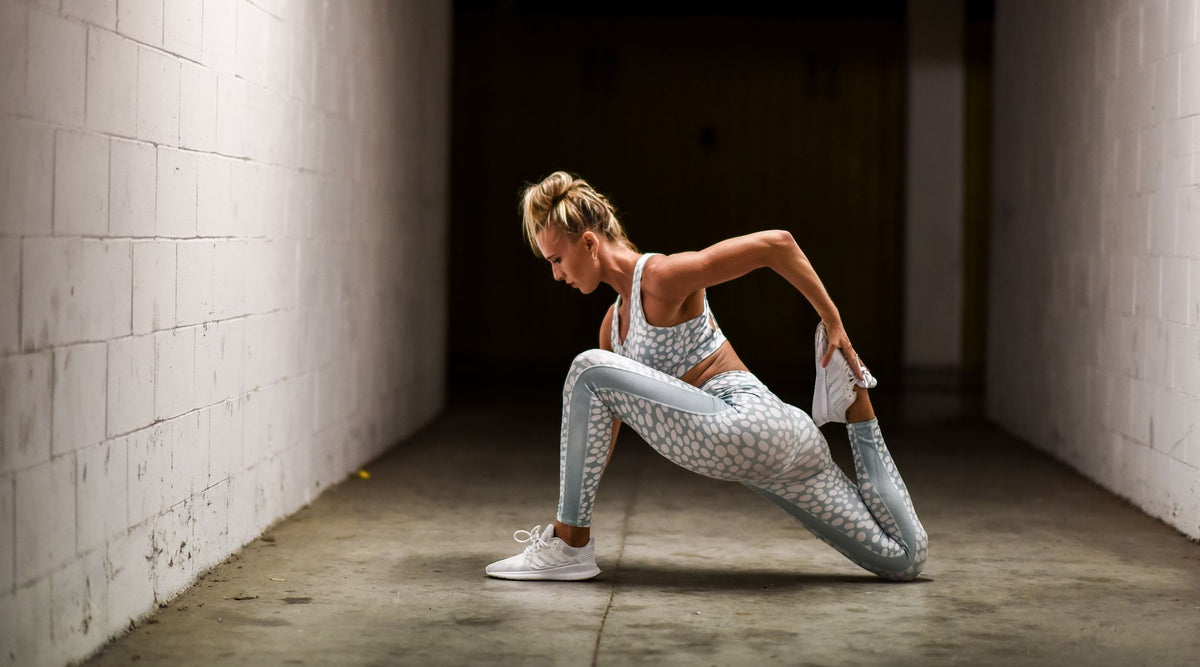
Heat-resilient endurance training and defensive agility work both demand activewear that manages sweat aggressively in high-heat conditions while providing the compression support needed for repeated deceleration and direction-change movements.
V3 Apparel's biker shorts paired with a high-impact sports bra deliver the breathable coverage and stability that hot-climate agility training demands. For longer endurance sessions, V3's 7/8 seamless leggings provide compression and moisture management across sustained heat exposure.

Discipline Wins When Flair Cannot
Paraguay's return to the World Cup is a reminder that not every successful athletic culture is built on spectacle. Sometimes the most effective approach is disciplined, repetitive and relentlessly consistent. Whether you are building heat tolerance through warm-weather training or developing the eccentric strength that defensive, reactive movement demands, La Albirroja's approach rewards those willing to do the unglamorous work that produces durable results.
Explore V3 Apparel's 7/8 leggings collection for the heat-ready support every disciplined session deserves.